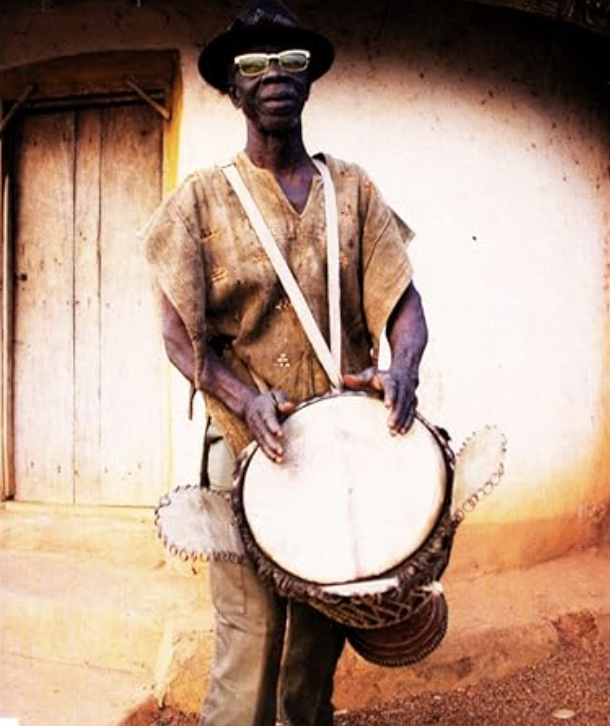

Sökö
Sökö as many of you know it, is from a village in Faranah (Sankaran region of Upper Guinea) and the most common version was created by the great Grand Master Fadouba Oularé (pictured) in the 1950s. The word Sökö means ‘uncle’ and is a part of the Soli ceremony - a very important feature of traditional West African societal structure and includes the initiation of young boys (Bilikaro) into adulthood.
The original Sökö was called Batukuna and is from the Djalonké (or Yalunka) people from the mountainous Fouta Djalon region of Guinea.
Sökö Bambulan was also created by Fadouba and the name comes from metaphor which relates to bamboo and also an elegant dancer. Sökö Bambulan was played to honour this dancer.
Much of this written information comes to us from Fadouba’s son, Sekouba Oularé.